Christianity’s hardest objections have surprising answers
Rebecca McLaughlin joins Faith Lab to talk about Confronting Christianity, the historical credibility of the Gospels, suffering, gender, and why the Christian story continues to provoke both skepticism and belief in 2026.
What If the Strongest Arguments Against Christianity Actually Point Toward It?
What if the very things that make you skeptical of Christianity are actually evidence for it?
I’ve spent countless hours wrestling with the hardest objections to the Christian faith. The history of injustice in the church. The problem of suffering. The supposed conflict between science and religion. These are real obstacles that deserve honest engagement, not dismissive answers or pat responses.
That’s why I was so excited to sit down with Rebecca McLaughlin on Faith Lab. Rebecca grew up in London, surrounded by highly intelligent people who had compelling reasons to reject Christianity. She didn’t run from those challenges. Instead, she leaned into them, spending years working alongside Christian professors at universities like Oxford, Cambridge, Harvard, and MIT.
What she discovered surprised me, and I think it might surprise you too.
Growing Up as the Only One Singing
Rebecca’s story starts in a place many of us can relate to: feeling alone in your faith.
She described a scene that stuck with me—singing hymns at school assemblies while 650 other girls looked at their hymn books and laughed. That’s a vivid picture of what it means to hold beliefs that don’t fit the cultural moment.
But here’s what made Rebecca different. She didn’t retreat into a defensive posture. She genuinely listened to the objections her friends raised.
“From a pretty early age, I was having conversations with highly intelligent people who had really good reasons for not being Christians,” Rebecca told us.
They thought Christianity was bigoted. They thought the Bible had been discredited. They thought science had disproved the idea of a creator. They saw religious diversity as evidence that choosing one faith was both arbitrary and offensive.
These weren’t straw-man arguments. These were thoughtful objections from people she respected.
The Harry Potter Moment That Changes Everything
Rebecca shared an illustration that I haven’t been able to stop thinking about.
If you’ve read or watched Harry Potter, you know there’s a moment in the penultimate book where Severus Snape—Harry’s longtime antagonist—appears to commit the ultimate betrayal. He kills Dumbledore. As a reader, you think you finally have proof that Snape is evil.
Then in the final book, you get to dive into Snape’s memories. And everything flips. What looked like hatred was actually driven by love. The act you thought was was actually mercy. The villain becomes something closer to a hero.
“Similarly, I think there are areas where if you look at Christianity kind of from a distance, it looks like Snape killing Dumbledore,” Rebecca explained. “And then when you dive more deeply, you realize, no, actually there is something very different going on here.”
This is the invitation at the heart of honest faith exploration. Not to ignore the difficult parts. Not to pretend the questions don’t exist. But to look more closely and see if the picture changes.
When Critics Use Christian Tools to Attack Christianity
Here’s something that stopped me in my tracks during our conversation.
Rebecca pointed out that many of the moral frameworks people use to critique Christianity actually come from Christianity itself.
Think about that for a moment.
When someone says the church has been on the wrong side of racial justice, they’re appealing to the principle that all humans have equal worth and dignity. Where did that idea come from? When someone critiques historical misogyny in the church, they’re assuming that women deserve equal treatment. That’s a biblical claim. When someone argues that the powerful shouldn’t exploit the weak, they’re drawing on values that entered Western civilization through the influence of Scripture.
As Rebecca put it: “The sword that they are using to jab at Christianity is actually a Christian sword.”
This doesn’t mean the critiques aren’t valid. Churches have absolutely failed to live up to biblical standards. But it does mean we need to ask a deeper question: Without Christianity, what foundation do these moral claims actually stand on?
Rebecca went even further, referencing Richard Dawkins’ famous statement that the universe has “no design, no purpose, no evil and no good, nothing but blind, pitiless indifference.”
If that’s true, then on what basis do we condemn injustice? If that’s true, then our deepest moral convictions are just evolutionary accidents with no real grounding.
This isn’t a gotcha argument. It’s an invitation to trace our beliefs back to their source.
The Question of Suffering That Won’t Go Away
Shelby asked Rebecca about the one objection that sits heaviest for many of us: How can a loving God allow so much suffering?
She was honest about her own wrestling. “I struggle to know whether it’s more of an emotional or an intellectual battle for me,” she admitted.
Rebecca’s response was both gentle and profound. She didn’t try to solve the problem of suffering in a neat philosophical package. Instead, she pointed us to a story.
In John chapter 11, Jesus receives word that his close friend Lazarus is desperately sick. The message from Lazarus’s sisters is telling: “Lord, the one you love is sick.” They’re appealing to Jesus’ affection. They expect him to come immediately.
He doesn’t.
Jesus deliberately waits until Lazarus has died. And when he finally arrives, Martha says what any of us would say: “Lord, if you had been here, my brother would not have died.”
Then something happens that I find stunning. Jesus stands outside the tomb and weeps.
He has the power to prevent this death. He will, in moments, demonstrate that power by raising Lazarus from the grave. And yet he weeps.
“I think part of the answer is that he enters into the suffering of those he loves,” Rebecca said. “It’s not that our suffering doesn’t matter to God, actually. It matters enough to bring tears to the eyes of the Son of God, even though he could have stopped it happening.”
This doesn’t answer every question about suffering. But it does something more important for many of us. It shows us a God who doesn’t stand at a distance from our pain. The cross itself is the ultimate expression of this—God entering into the worst of human suffering, not avoiding it.
The Baby and the Needle
Rebecca shared an image that has stayed with me.
She remembered holding her infant daughter for immunizations. This tiny person trusted her completely. And Rebecca held her down while strangers stuck needles into her.
“I just remember the look in her eye of like betrayal,” Rebecca said. “How could you do this? You’re supposed to be caring for me and you’re letting these people hurt me.”
She couldn’t explain to her baby that the pain was actually evidence of love, not its absence. The immunization was for her daughter’s good, even though it felt like harm.
“I think if we take the narrative of the Bible seriously, there are times when we are like that baby,” Rebecca reflected. “We cannot understand why God is allowing us to suffer, but that doesn’t necessarily mean that there couldn’t be a reason.”
This isn’t a dismissive answer. It’s an honest acknowledgment that we might be working with incomplete information. And it’s an invitation to trust that the same God who wept at Lazarus’s tomb might actually care more than we know.
What Frodo and Sam Knew About Hope
Rebecca brought up another literary image that resonated deeply.
In The Lord of the Rings, there’s a moment when Frodo and Sam are in their darkest hour. They imagine their story being written down someday. From where they stand, the ending looks terrible. At best, they might succeed and die in the process.
But we, as readers, know something they don’t. We see how the whole story unfolds. What looked hopeless was actually part of a redemptive arc they couldn’t perceive in the moment.
“Often we’re where Frodo and Sam were,” Rebecca said. “We’re kind of in the middle thinking, gosh, I wonder how this story is going to end.”
The Christian claim is that if Jesus really is who he says he is—the resurrection and the life—then our story has a guaranteed ending that exceeds our wildest imagination. Not because suffering isn’t real. But because it isn’t the final word.
When Jesus Makes an Audacious Claim
There’s a moment in that Lazarus story that I think we often rush past.
When Jesus finally shows up and Martha confronts him, he doesn’t just comfort her. He makes one of the most staggering claims ever spoken.
“I am the resurrection and the life. Anyone who believes in me, even though he dies, will live and whoever lives and believes in me will never die. Do you believe this?”
As Rebecca pointed out in our conversation, this isn’t Jesus saying he knows how to help with resurrection. He’s not claiming to be a conduit to something larger. He’s saying he IS the resurrection. He IS the life.
“He’s saying anyone who believes in him has life even if they’re dead, and anyone who is walking around today and doesn’t know Jesus is in fact dead even though they look like they’re alive,” Rebecca explained.
This is either the most profound truth ever uttered or the most outrageous delusion. There’s no comfortable middle ground. And Jesus puts the question directly to Martha, and by extension to all of us: Do you believe this?
I appreciate that Rebecca didn’t try to soften this claim or make it more palatable for modern ears. The Jesus we meet in the Gospels makes demands on our belief. He invites investigation, but he doesn’t leave room for casual acknowledgment.
The Road Ahead
What struck me most about this conversation was Rebecca’s tone.
She wasn’t defensive. She wasn’t combative. She genuinely engaged with the hardest questions people bring to Christianity without pretending they were easy to answer.
At the same time, she didn’t retreat into vague spirituality. She made clear, substantive claims about who Jesus is and why his story matters for everyone.
For those of you in the middle of deconstruction, this conversation might feel like fresh air. Here’s someone who has heard all the objections, has taken them seriously, and still finds Christianity not just survivable but compelling.
For those of you who’ve been believers for years, this might give you new language for conversations with skeptical friends. Not for arguments, but genuine ways to invite people to look more closely.
And for those of you who are genuinely unsure what you believe, I hope this gives you permission to keep exploring. The questions are real. The objections deserve respect. But so does the possibility that when you dive deeper, you might find something other than what you expected.
Rebecca’s closing thought has stayed with me: “Rather than Christianity looking like the enemy, actually it becomes the best friend you have.”
That’s a bold claim. But if there’s even a chance it’s true, isn’t it worth investigating?
Frequently Asked Questions
Were the Gospels written by eyewitnesses or much later?
This is a common misconception Rebecca addressed. The Gospels were written well within the lifetimes of people who witnessed Jesus firsthand. Mark’s Gospel, generally considered the earliest, was written roughly 35-45 years after Jesus’ ministry. John’s Gospel came about 60 years after the events. While that might sound like a long time, consider that your grandparents can reliably recall their wedding day or the birth of their children decades later. We remember the significant things, and meeting Jesus was certainly that.
If God is all-powerful, why doesn’t he just end suffering?
Rebecca didn’t try to dodge this question. She acknowledged that Scripture presents a God who absolutely could intervene at any moment. She doesn’t believe God’s hands are tied. But she pointed us to the Lazarus story, where we see a God who has the power to prevent suffering and still chooses to enter into it with us. The cross is the ultimate expression of this—God not standing at a distance from our pain, but experiencing the worst of it himself.
Why should I trust the Bible when the church has done so much harm?
Rebecca’s response to this was eye-opening. She acknowledged that real harm has been done by people claiming to follow Christ. But she also pointed out that the very standards we use to critique those failures come from biblical teaching. When the church fails to value human equality or protect the vulnerable, it’s failing to live up to its own Scriptures, not embodying them. The solution isn’t less Bible, but more faithful engagement with what it actually teaches.
Want to dive deeper? Become a Faith Lab Premium member to access bonus episodes, join our community where you can keep the conversation going, process these ideas together, and connect with others on similar journeys. Learn more at faithlabshow.com/premium
More Episodes

N.T. Wright: Do Christians Go to Heaven When They Die?
Do Christians go to heaven when they die? NT Wright says Christian hope is resurrection and new creation.

N.T. Wright: Did Jesus Really Rise from the Dead?
NT Wright on the historical evidence for the resurrection. Not theology, history. We discuss women witnesses, the empty tomb, and why skeptics struggle.
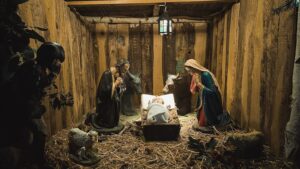
Do the Gospel Birth Narratives Contradict?
New Testament scholar Caleb Friedeman tested a longstanding scholarly claim that ancient birth narratives were never meant to be historical. What he found in the ancient biographers reframes how we should read Matthew and Luke's opening chapters.
Premium Membership
Get the full, unedited version of every interview, plus video, and help Faith Lab reach more people who need it.
JOIN PREMIUM